
TL;DR: Day 9 of the Strait of Hormuz crisis shows accelerating deterioration. Daily vessel transits collapsed from 153 to just 13 (CSIS data), with some days seeing only 2 transits total. Major carriers (Maersk, MSC, Hapag-Lloyd, CMA CGM) have formally suspended — not paused — Hormuz operations. The first container ship casualty is confirmed (Safeen Prestige struck, crew abandoned). P&I insurance cover was pulled effective March 5, making transit economically uninsurable. MSC has declared all Gulf-bound cargo “at end of voyage” regardless of actual delivery status. GPS jamming is active. Over 147 container ships (470,000 TEU) remain trapped inside the Persian Gulf with no resolution in sight.
The Situation Now: From Void to Active Danger
Last week we posted about the maps—the void over Iran, the ships clustered outside the Strait. Day 9 brings worse conditions: active navigation warfare, confirmed casualties, and carrier suspensions that have severed the Middle East maritime pipeline entirely.
The Numbers: Before vs. Now
Pre-Conflict Baseline (Starboard Maritime Intelligence):
- Strait of Hormuz averaging 153 vessel transits per day
Current Reality (CSIS/JMIC Data, March 6):
- Daily average collapsed to 13 transits per day since March 1
- March 4 recorded just 1 inbound, 1 outbound—that’s it
- Zero oil tanker transits confirmed in a 24-hour window (Bloomberg/JMIC)
- 147 container ships carrying roughly 470,000 TEU trapped inside the Persian Gulf (Xeneta/Seatrade Maritime)
- 14,000 FEU of containers normally flowing into the Middle East daily—pipeline severed
Carrier Suspensions: From Pause to Termination
The operational response has escalated from caution to complete withdrawal.
Formally Suspended Hormuz Operations:
- A.P. Moller – Maersk
- MSC Mediterranean Shipping Company
- Hapag-Lloyd AG
- CMA CGM
Critical: These are formal suspensions, not pauses. Maersk has additionally suspended trans-Suez sailings through the Bab el-Mandeb.
First Confirmed Casualty
The Malta-flagged Safeen Prestige (1,740 TEU feeder vessel) was struck 2 nautical miles off Oman. Crew abandoned ship. The tugboat dispatched to assist was subsequently struck by two missiles on March 6.
This confirms the threat has escalated from posturing to active targeting of commercial container vessels.
The Insurance Crisis: Transit Becomes Economically Impossible
P&I (Protection and Indemnity) insurance cover was pulled effective March 5.
Without P&I cover, the economic risk of transiting the Strait is essentially uninsurable for most vessel owners. This creates a hard stop independent of security considerations—no insurance means no financing, no port entry permissions, and no legal protection for cargo interests.
Naval Escorts: The US Navy offered escort convoys. Traffic remains near zero. Naval presence has not moved the needle on commercial vessel willingness to transit.
Navigation Warfare: GPS Jamming and Flag Signaling
GPS Interference
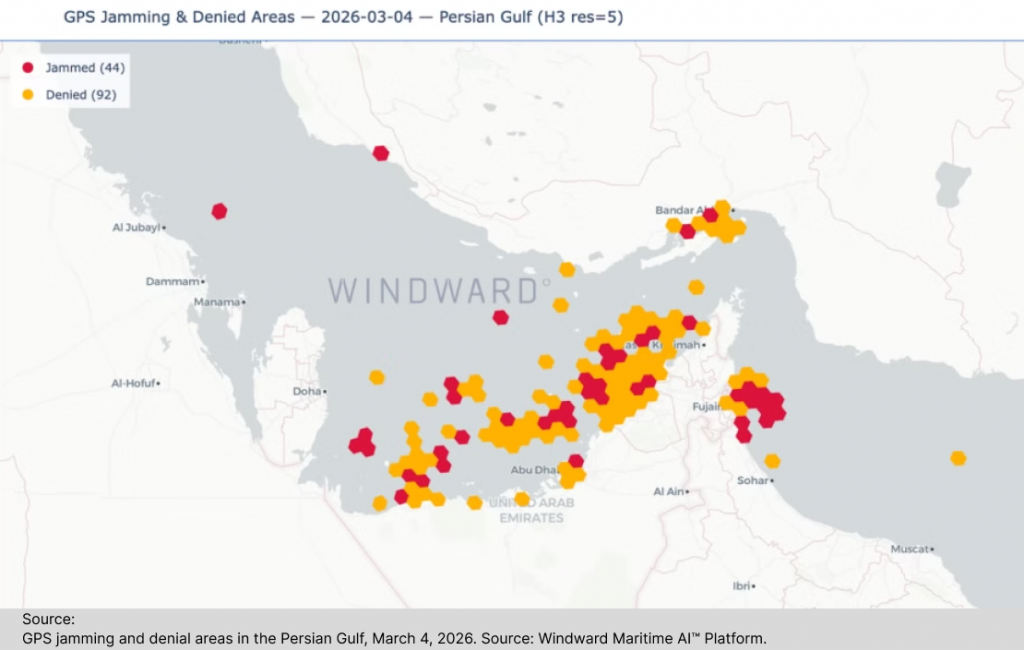
Sophisticated GPS jamming is affecting positioning systems and communication across the area. Your vessel tracking tools may not be showing you what’s actually happening. AIS signals may be unreliable or spoofed.
Nationality Broadcasting
Ships are now broadcasting nationality attempting to secure safe passage:
- Bulk carrier Iron Maiden transited signaling “CHINA OWNER”
- LPG tanker BOGAZICI broadcast “Muslim-owned and Turkish-operated”
The result: Even nationality signaling isn’t working consistently. CSIS data shows that before the conflict, 49+ Chinese-flagged vessels transited weekly. Since March 1? Two.
Key Insight: The Strait does not care about your flag right now.
The MSC “End of Voyage” Declaration: Contractual Chaos
MSC has taken the unprecedented step of officially declaring all Gulf-bound cargo “at end of voyage”—whether at sea or in port.
Translation: Your cargo sitting on a vessel inside the Gulf has been contractually declared delivered, regardless of whether it reached its intended destination. What happens next—storage, alternative routing, or abandonment—is now a separate negotiation with your carrier.
This triggers force majeure clauses, transfers risk to cargo owners, and effectively suspends carrier liability for undelivered goods.
Trade Lane Impact: Day 9 Realities
Immediate Consequences
- Middle East supply chains: Effectively severed. No inbound container capacity via Hormuz.
- Indian Subcontinent: Cargo normally routed via Gulf hubs facing indefinite delays.
- Europe-Asia alternatives: Cape of Good Hope now mandatory, adding 14-18 days and $500K+ in fuel costs per voyage.
- Air freight: Dubai (DXB) and Doha (DOH) remain primary hubs, but capacity is crushing under diverted ocean freight demand.
Rate Cards
The cascading effects haven’t fully hit rate cards yet. They will. When 470,000 TEU is trapped and carriers suspend services, supply-demand mechanics guarantee violent rate spikes.
Key Takeaways: Critical Actions for Day 9
- 🔹 Transit Collapse: 153 daily transits → 13 daily. The Strait is effectively closed to commercial traffic.
- 🔹 Insurance Void: P&I cover pulled March 5. No insurance = no transit regardless of security.
- 🔹 Carrier Suspensions: Maersk/MSC/Hapag/CMA CGM formally suspended—not paused—operations.
- 🔹 First Casualty: Safeen Prestige struck, confirming active targeting of container vessels.
- 🔹 GPS Warfare: Active jamming means AIS/tracking data unreliable. Assume position uncertainty.
- 🔹 Contractual Chaos: MSC “end of voyage” declaration shifts liability to cargo owners for trapped goods.
- 🔹 470,000 TEU Trapped: Inventory inside the Gulf is stuck indefinitely. Plan for stockouts.
Frequently Asked Questions
Is the Strait of Hormuz completely closed?
Effectively yes. Daily transits collapsed from 153 to 13, with some days seeing only 2 transits. Major carriers have suspended operations, P&I insurance is unavailable, and the first container vessel casualty has been confirmed.
What is the “end of voyage” declaration by MSC?
MSC declared all Gulf-bound cargo “at end of voyage” regardless of actual delivery status. This contractual maneuver treats cargo as delivered when it enters the Gulf, suspending carrier liability for final delivery and triggering force majeure provisions.
Can ships transit the Strait with naval escorts?
Despite US Navy escort offers, commercial traffic remains near zero. CSIS data shows even Chinese-flagged vessels (normally 49+ weekly transits) have dropped to 2 since March 1. Escorts have not restored commercial confidence.
Why is P&I insurance important for Hormuz transit?
Protection and Indemnity (P&I) insurance covers third-party liability, pollution, and crew injury. Without P&I cover (pulled March 5), vessel owners face unlimited uninsured exposure, making transit economically impossible regardless of security conditions.
Is GPS jamming affecting vessel tracking?
Yes. Sophisticated GPS interference is active across the region, affecting navigation and AIS transmission. Vessel tracking tools may display inaccurate positions or show vessels stationary when they are actually moving (or vice versa).
How many container ships are trapped in the Persian Gulf?
Approximately 147 container ships carrying roughly 470,000 TEU are trapped inside the Persian Gulf with no current exit options through Hormuz.
Day 9 Crisis Checklist: Immediate Actions
- [ ] Insurance Audit: Verify if your cargo on trapped vessels is covered under “war risk” or “trapped cargo” provisions—standard marine cargo insurance may exclude this scenario post-March 5
- [ ] MSC Clients: If using MSC, review the “end of voyage” declaration impact on your Incoterms and liability exposure
- [ ] Inventory Assessment: Identify SKUs sourced from or routed through the Gulf. Assume 30-60 day minimum delays
- [ ] Alternative Sourcing: Activate backup suppliers for critical components normally flowing through Dubai/Jebel Ali
- [ ] Rate Lock: Secure alternative lane rates (Cape Route, Air) before full market reaction spikes costs
- [ ] GPS Verification: Do not rely solely on AIS tracking for Gulf-positioned vessels—verify status through direct satellite comms if possible
- [ ] Client Communication: Proactive notification to customers about Gulf-origin shipment indefinite delays
The Bottom Line
Day 9. No resolution in sight. The Strait of Hormuz has transitioned from a high-risk corridor to an active combat zone for commercial shipping. With insurance void, carriers withdrawn, and GPS unreliable, the 470,000 TEU trapped inside represents inventory in indefinite limbo.
What are you seeing on your end—bookings, rate quotes, client calls? Drop updates below. Real-time intelligence sharing is critical while tracking data remains unreliable.