TL;DR: If you are quoting cargo into or out of landlocked African markets, the biggest commercial risk is rarely the headline rate. It is whether your inland partner can clear, coordinate, update, and recover fast enough once the shipment moves beyond the port. The safest play is to verify corridor fit, customs ownership, response speed, escalation discipline, and proof of recent inland execution before you promise a price.
For independent forwarders, that is exactly where One Globe Alliance starts to matter. A verified network does not just give you names. It gives you a faster path to credible partners when an enquiry lands on a corridor your existing agent list does not fully cover.
Africa is a good example of why this matters. The World Bank Logistics Performance Index keeps customs efficiency, logistics quality, tracking, and timeliness at the center of performance measurement, while the AfCFTA agenda continues to raise the strategic value of reliable intra-African coverage. In practice, that means more opportunity for forwarders, but also more exposure when inland execution depends on weak or unverified partnerships.
What smart forwarders do before they quote a landlocked corridor
They verify the inland handoff first and build the rate around that reality.
- They confirm the gateway-to-inland chain. Port handling is only one part of the shipment. The actual risk often sits in the onward move to Lusaka, Kigali, Kampala, Lilongwe, Gaborone, or other inland destinations.
- They identify who owns customs and exceptions. If documents change, border queues build, or final delivery timings move, your partner needs a clear operating role instead of vague reassurance.
- They test responsiveness before they trust it. A partner who answers a discovery email quickly is far more useful than a long contact list that goes quiet once the quote becomes urgent.
- They check recent lane activity. You want evidence that the partner has handled similar cargo, similar gateways, and similar inland destinations recently, not just a broad claim of African coverage.
A practical corridor lens for partner discovery
You do not need a perfect network map before every quote. You do need a disciplined way to decide whether the inland partner is credible for the exact corridor in front of you.
| Corridor type | Typical gateway question | What you should verify before quoting |
|---|---|---|
| East Africa to inland markets | Can the partner move reliably from Dar es Salaam or Mombasa into Zambia, Rwanda, Uganda, or DRC-linked cargo flows? | Border routine, customs ownership, truck visibility, document escalation path, and proof of recent inland shipments. |
| West Africa to Sahel or inland distribution points | Does the partner understand both port execution and inland follow-through after discharge? | Transit coordination, consignee communication discipline, claims handling, and realistic update cadence. |
| Southern Africa cross-border moves | Can the partner support cargo beyond the main gateway without slowing the quote cycle? | Final-mile coverage, customs brokerage scope, exception management, and who owns the customer-facing update loop. |
If your team is still relying on a static agent spreadsheet, this is where the process starts to crack. That is also why our article on Africa freight network membership ROI matters: once quote volume rises, faster partner access becomes a sales issue, not just an operations issue.
The 7-point Africa freight partner discovery checklist
- Ask for the exact inland coverage. Do not accept “we cover East Africa” as an answer. Ask for gateway, border, inland city, and cargo type fit.
- Clarify customs responsibility. Know who handles entry formalities, document corrections, and border coordination.
- Measure response speed on the first enquiry. The initial reply often predicts what will happen once the shipment becomes time-sensitive.
- Request one recent corridor example. A recent execution example is more valuable than a generic capability list.
- Test escalation logic. Ask who owns updates when there is a delay, a document mismatch, or a consignee-side issue.
- Confirm commercial realism. The cheapest inland extension is not helpful if the partner cannot defend the transit assumptions behind it.
- Check whether the relationship is repeatable. One successful ad hoc move is good. A partner you can trust for repeated quotes is what builds margin over time.
Case-style example: a better way to quote Zambia from an East African gateway
Imagine a mid-sized forwarder receives a customer enquiry for import cargo moving through Dar es Salaam and onward into Zambia. The rate from the port is manageable. The problem is confidence. The forwarder has two old contacts in the region, neither has responded recently, and the customer wants an answer the same day.
The weak version of this workflow is familiar: send messages to multiple unknown contacts, wait for partial answers, stitch together a quote, and hope inland execution holds. The stronger version is different. The forwarder starts with verified partner discovery, narrows to partners with relevant inland experience, checks who owns customs and update cadence, and then quotes with clearer commercial assumptions.
That does not eliminate corridor complexity. It does reduce avoidable uncertainty. And in freight sales, reducing avoidable uncertainty is often what protects conversion.
Why this matters more as AfCFTA opportunities expand
The broader opportunity is not theoretical. The AfCFTA framework is built around a more integrated African market, and UNCTAD’s transport and trade logistics work keeps pointing to the importance of trade facilitation, transit efficiency, and logistics capability in making that opportunity real. For forwarders, that means more cross-border demand can arrive before your partner bench is ready for it.
That is why partner discovery needs to sit closer to the commercial workflow. It is not a back-office afterthought. It shapes whether your sales team can answer faster, promise less risk, and expand into new lanes without improvising every time.
When a verified network becomes the smarter move
If your business only sees occasional African enquiries, ad hoc partner search may still be tolerable. But once your team is pricing multiple lanes, the hidden cost of manual discovery rises quickly:
- more time lost between enquiry and quote
- more uncertainty around inland execution
- more commercial risk when the customer needs speed
- more difficulty building repeatable trade-lane confidence
That is where One Globe Alliance membership becomes practical, not abstract. You get verified freight partners, faster discovery, and a platform built for quote requests, partner search, and long-term trade-lane growth. If you are comparing options, our piece on JCtrans and X2 Logistics Network alternatives for African freight forwarders is a useful next read.
Glossary: three terms that matter on African inland quotes
Verified freight partner
A partner whose credibility, business presence, and practical operating fit have been checked well enough to reduce blind-risk discovery.
Corridor fit
The degree to which a partner can actually support the precise port, border, inland city, shipment type, and customer expectation attached to the enquiry.
Quote protection
The commercial discipline of avoiding rates that look attractive at the top line but are weak once inland execution, update quality, or exception handling is tested.
FAQs
Why are landlocked African quotes harder to protect than port-to-port quotes?
Because the risk sits in the handoffs, not only the linehaul. Once cargo moves beyond the gateway port, the quote depends on inland customs execution, border timing, equipment availability, and local partner follow-up.
What should a freight forwarder verify before sending a rate to Zambia, Rwanda, Uganda, or Malawi?
Verify who handles customs clearance, whether the partner can support the exact inland destination, how quickly they answer quote clarifications, which border crossings they use most often, and how they manage exceptions when documents or transit timings change.
When does paid freight network membership make more sense than ad hoc agent search in Africa?
It becomes the stronger option when your team is quoting multiple African corridors every month, chasing too many unverified contacts, or losing time between first enquiry and final confirmation. A verified network reduces search friction and raises confidence before the quote goes out.
Next step for forwarders
If your team wants fewer blind handoffs and stronger African quote coverage, start with a better partner discovery process and then decide whether a verified network should sit behind it. You can explore the One Globe Alliance blog, review the FAQ, or go straight to membership options if you are ready to improve how your company finds and qualifies overseas partners.
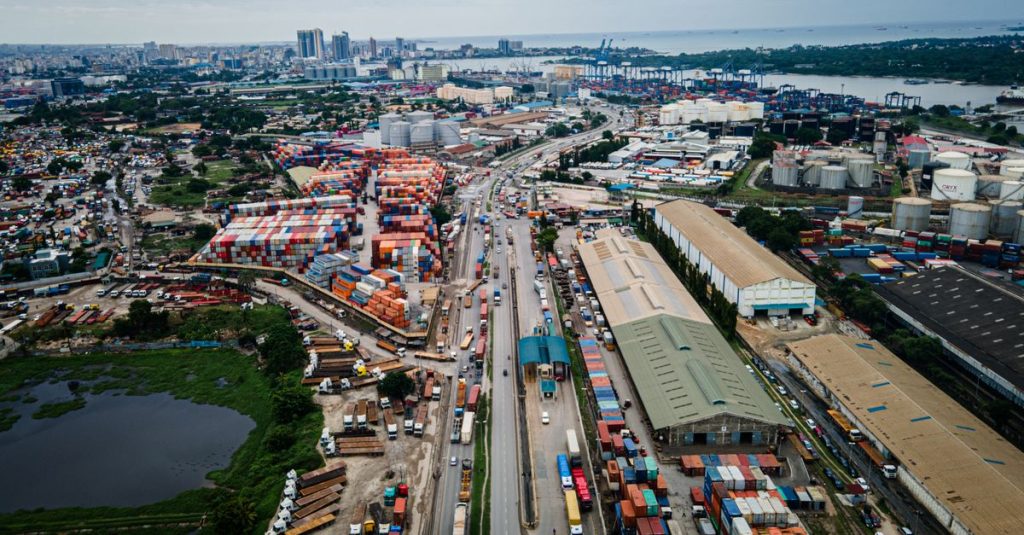
Featured image credit: Photo by Alex Levis on Pexels.