
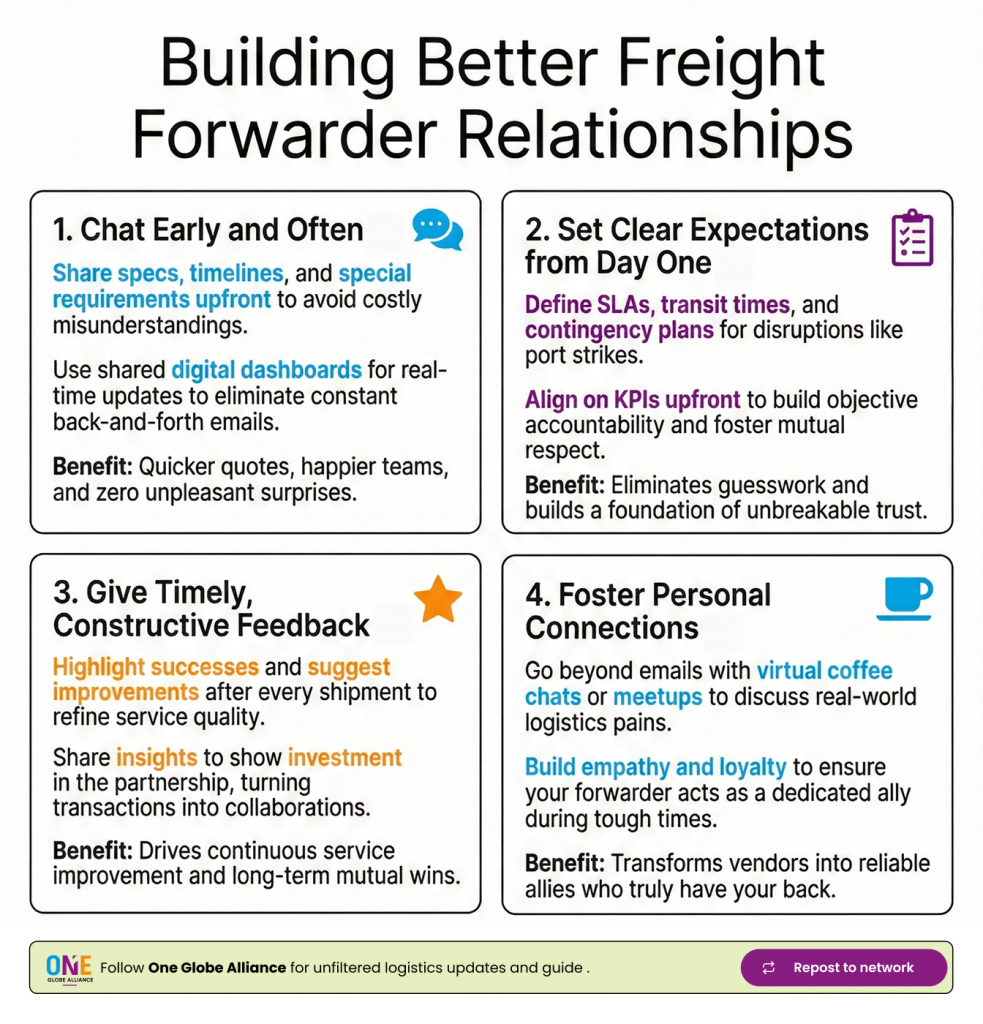
TL;DR: Most supply chain delays stem from poor forwarder communication, not operational failures. Building strategic freight forwarder relationships through early engagement, clear SLAs, and transparent feedback loops reduces unexpected costs and transforms vendors into logistics allies. Here are 6 proven strategies to implement today.
Why Traditional Freight Forwarding Relationships Fail
Delays, miscommunications, and unexpected costs have become the industry norm. But these aren’t inevitable operational hazards—they’re relationship failures.
After years managing logistics networks, we’ve observed a clear pattern: transactional vendor relationships create transactional results. When you treat your freight forwarder as a commodity, you get commodity-level service. When you treat them as a strategic partner, you unlock preferred pricing, priority crisis handling, and proactive problem-solving.
Key Insight: The most cost-efficient supply chains aren’t built on the lowest rates—they’re built on the strongest relationships.
6 Strategies for Stronger Freight Forwarder Relationships
1. Communicate Early and Often
Share specifications immediately to eliminate last-minute surprises.
Forwarders need comprehensive shipment details upfront—timelines, cargo specifications, and special handling requirements—to deliver accurate quotes and allocate appropriate resources.
The Impact:
- Faster quote turnaround times
- Reduced operational firefighting
- Higher team satisfaction on both sides
Action Step: Create a standardized pre-shipment checklist covering dimensions, weight classifications, hazardous materials status, and delivery constraints. Send this before requesting quotes.
2. Set Clear Expectations from Day One
Define SLAs, transit times, and accountability metrics upfront.
Alignment on Key Performance Indicators (KPIs) and Service Level Agreements (SLAs) eliminates ambiguity. Discuss contingency protocols for port congestion, weather disruptions, and regulatory shifts before they occur.
Critical Elements to Define:
- Acceptable transit time ranges by lane
- Tracking update frequency
- Escalation protocols for disruptions
- Cost authorization limits for emergency actions
This creates mutual accountability and replaces reactive guessing with proactive trust.
3. Deliver Timely, Constructive Feedback
Post-shipment reviews transform one-off transactions into long-term partnerships.
Share what worked well immediately after delivery. Address improvement areas with specific, actionable suggestions rather than general complaints.
Why This Matters: Feedback demonstrates investment in the relationship. Forwarders refine their service based on your input, creating a customized experience that improves with every shipment.
Pro Tip: Frame critiques as collaborative problem-solving. “How can we prevent this customs delay next quarter?” builds more goodwill than “You missed the deadline.”
4. Foster Personal Connections Beyond Email
Schedule virtual coffees and attend industry events together.
Understanding your forwarder’s operational reality—port congestion challenges, regulatory compliance burdens, capacity constraints—builds empathy and loyalty.
Relationship-Building Tactics:
- Quarterly video check-ins unrelated to active shipments
- Joint attendance at logistics conferences
- Facility visits to see their operations firsthand
When forwarders know you as a person, not a purchase order number, they become allies instead of vendors.
5. Leverage Technology for Radical Transparency
Integrated systems from booking to delivery cut miscommunications significantly.
Shared visibility platforms demonstrate mutual commitment to efficiency. Real-time tracking, automated documentation sharing, and digital customs filing create audit trails that prevent disputes.
Results:
- Smoother operational workflows
- Reduced administrative stress
- Faster exception management
6. Reward Loyalty Strategically
Repeat business and referrals unlock preferred pricing and priority handling.
Long-term partnerships receive tangible benefits: preferred rates, dedicated account management, and crisis prioritization when capacity tightens.
Bonus Benefits:
- Joint business planning sessions
- Co-developed contingency protocols
- Early access to new service lanes
Strong bonds create compound returns: less drama, better commercial terms, and sustainable growth for both parties.
Key Takeaways: What You Need to Know
- 🔹 Early Communication: Share complete specs upfront to prevent costly last-minute changes and accelerate quoting
- 🔹 Expectation Alignment: Document SLAs and KPIs before the first shipment to eliminate accountability gaps
- 🔹 Feedback Loops: Post-shipment reviews signal investment and drive continuous service improvement
- 🔹 Human Connection: Personal relationships transform vendor dynamics into strategic partnerships
- 🔹 Tech Integration: Shared visibility platforms reduce friction and prove commitment to operational excellence
Frequently Asked Questions
What is freight forwarder relationship building?
Freight forwarder relationship building is the strategic process of transforming transactional logistics vendor interactions into collaborative partnerships through proactive communication, aligned expectations, and mutual investment in long-term success.
How long does it take to see ROI from forwarder relationship building?
Most shippers notice improved quote accuracy and communication responsiveness within 30-60 days of implementing structured feedback and expectation-setting. Preferred pricing and crisis priority handling typically materialize after 6-12 months of consistent partnership behavior.
Can small businesses benefit from forwarder relationship building?
Yes. Independent forwarders often provide more personalized service to smaller shippers who engage relationally, compared to large-volume shippers who receive transactional treatment. Small businesses frequently see the fastest relationship ROI due to agility in implementation.
Implementation Checklist
- [ ] Draft standardized shipment specification template with all technical requirements
- [ ] Schedule kickoff call with current forwarder to align on KPIs and SLAs
- [ ] Create calendar reminder for post-shipment feedback (within 48 hours of delivery)
- [ ] Book quarterly 30-minute relationship check-ins unrelated to active issues
- [ ] Evaluate shared visibility technology options for integration
- [ ] Document referral process for rewarding forwarder partners
Ready to Transform Your Logistics Network?
Independent forwarders: Tired of solo struggles? Join our vetted, tech-driven network for real collaboration, shared resources, and collective growth.