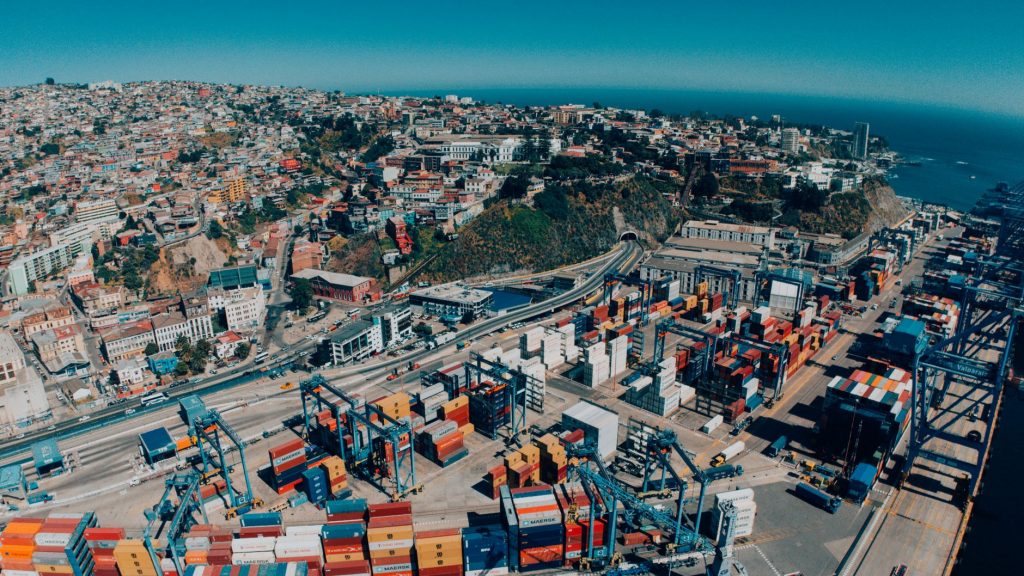
The Netherlands may look small on a world map, but in international logistics, it has never been particularly interested in acting small.
With goods moving through major ports, airports, warehouses and European distribution routes, Dutch freight forwarders regularly coordinate shipments involving markets across Europe and the rest of the world.
A freight forwarder in the Netherlands may handle the Dutch side perfectly but still need dependable partners for supplier pickup in China, customs support in the United States, consolidation in India or final delivery in South Africa.
That is where a freight forwarding network in the Netherlands becomes useful.
The right network helps Dutch freight forwarders connect with overseas agents, exchange live cargo inquiries, compare quotations and develop new trade lanes.
The wrong network gives you a long directory and another password to forget.
This guide explains how freight-forwarding networks work, what companies in the Netherlands should look for and how an active platform can help turn international contacts into business opportunities.
What Is a Freight Forwarding Network?
A freight forwarding network is a professional community of independent logistics companies operating in different countries.
Members work together when a shipment requires services outside their own market.
For example, imagine a Dutch freight forwarder receives an inquiry for industrial equipment moving from Rotterdam to Johannesburg.
The Dutch company can handle:
- Supplier coordination
- Cargo pickup
- Export documentation
- Origin handling
- Freight booking
However, it may need a South African partner for:
- Destination handling
- Customs-related support
- Local transportation
- Warehousing
- Final delivery
A freight forwarding network helps the Dutch company find and communicate with a potential destination partner.
One member handles the Netherlands side. Another handles the South African side. The customer receives a coordinated solution.
The cargo crosses several borders, while the customer ideally notices none of the chaos behind it.
That is the magic of good freight forwarding.
Why Freight Forwarders in the Netherlands Need Global Partners
The Netherlands is deeply connected to international trade. Dutch freight forwarders frequently coordinate cargo moving between Europe and markets across Asia, Africa, the Middle East and the Americas.
However, no independent freight forwarder can maintain offices everywhere.
A global network allows a Dutch forwarder to provide wider coverage through reliable overseas partnerships.
Members can use a network to:
- Find freight agents in other countries
- Request origin and destination rates
- Exchange cargo inquiries
- Receive Netherlands-related opportunities
- Develop international trade lanes
- Support customers in unfamiliar markets
- Find specialised cargo services
- Build reciprocal overseas relationships
- Extend their service capabilities
Suppose a customer asks a freight forwarder in Amsterdam:
“Can you arrange collection from three suppliers in Shenzhen, consolidate the goods and ship everything to the Netherlands?”
Without a Chinese partner, the forwarder may have to decline the opportunity or search for an unknown provider.
With the right freight network, the company can contact a member in China that can coordinate pickup, consolidation, documentation and origin operations.
The Dutch forwarder keeps the customer relationship and offers a more complete service.
Everyone wins, except perhaps the spreadsheet tracking three suppliers. That spreadsheet has seen things.
How a Freight Forwarding Network Works
Let us look at an illustrative example.
Sophie works for a freight-forwarding company near Rotterdam. Her customer needs to ship commercial equipment from the Netherlands to Dubai.
Sophie can manage the European side but needs a partner in the UAE for destination handling and delivery.
Using a freight network platform, she can:
- Post the cargo inquiry.
- Add the route, weight, dimensions and service requirements.
- Notify relevant members operating in the UAE.
- Receive quotations from interested partners.
- Compare rates and services.
- Ask questions directly through the platform.
- Select a suitable destination agent.
- Coordinate the shipment.
A few weeks later, the UAE forwarder receives an inquiry involving cargo moving to Rotterdam and contacts Sophie for support.
One inquiry becomes a conversation. The conversation becomes a working relationship. The relationship may create future business in both directions.
This is what a freight network should help members achieve.
Directory-Based Networks vs Active Freight Platforms
Many freight networks provide access to a member directory.
A directory helps forwarders search for companies by location and view their contact details. That can be useful, especially when entering a new market.
But a directory alone does not create business activity.
An active freight platform gives members tools to exchange current requirements and respond to genuine opportunities.
| Directory-based network | Active freight network platform |
|---|---|
| Provides company profiles | Provides profiles and live inquiries |
| Members manually search for agents | Relevant members can receive opportunities |
| Conversations start through cold outreach | Conversations begin around active cargo |
| Quotations arrive through scattered emails | Quotations can be submitted through the platform |
| The main value is access to contacts | Value comes from contacts, tools and activity |
| Team participation may be limited | Sales, pricing and operations teams can participate |
A directory tells you that a company exists.
An active platform helps you discover whether the company is interested in your inquiry and ready to quote.
It is the difference between finding a restaurant online and finding one that is actually open.
What to Look For in a Freight Forwarding Network in the Netherlands
1. Active Cargo Inquiries
The value of a freight network depends heavily on member activity.
When members post live cargo inquiries, Dutch freight forwarders can respond to opportunities involving:
- Shipments originating in the Netherlands
- Cargo arriving in the Netherlands
- European distribution
- Port or airport support
- Local pickup and delivery
- Warehousing and consolidation
- Cross-border European services
Instead of waiting for another member to find their company profile, Dutch forwarders can participate in active opportunities.
A network with fewer engaged members may create more value than one with thousands of silent listings.
Five relevant inquiries are usually more useful than 500 company profiles last updated when people still printed directions from the internet.
2. Strong International Coverage
A freight forwarding network Netherlands-based companies join should provide coverage in the markets they serve.
Depending on the forwarder’s customer base, important regions may include:
- Western and Eastern Europe
- Scandinavia
- The United Kingdom
- China and Southeast Asia
- India
- The Middle East
- Africa
- North America
- Central and South America
- Australia and Oceania
Before joining a network, ask:
- Are there members in our main origin and destination markets?
- Are those members active?
- Can we find partners for our preferred transportation modes?
- Are members posting inquiries involving the Netherlands?
- Does the network cover regions where we want to expand?
A map filled with country flags looks impressive. A responsive agent at the correct destination is more impressive.
3. Relevant Inquiry Matching
A Dutch freight forwarder does not need to receive every inquiry posted worldwide.
An ocean freight specialist near Rotterdam may not be interested in every unrelated domestic trucking requirement in another country.
A useful network should match opportunities using information such as:
- Origin
- Destination
- Operating country
- Trade lane
- Transport mode
- Service requirement
- Cargo type
Relevant matching helps members focus on inquiries they can realistically support.
Otherwise, the freight network may deliver plenty of notifications but very little value.
That is not opportunity matching. That is an inbox stress test.
4. Quotation Submission and Comparison
International freight quotations often include several charges:
- Freight costs
- Origin handling
- Destination handling
- Documentation
- Customs-related services
- Pickup and delivery
- Warehousing
- Insurance
- Port or airport charges
- Additional local services
If quotations arrive through separate emails, spreadsheets and messaging apps, comparing them becomes difficult.
An active platform should help freight forwarders review responses in a more organised way.
Consider this hypothetical example:
| Partner A | Partner B |
|---|---|
| Lowest initial rate | Slightly higher rate |
| Some charges are unclear | All charges are itemised |
| Responded after two days | Responded within one hour |
| No clear quotation validity | Validity is clearly stated |
| Limited operational information | Full service scope is explained |
Partner A may look cheaper at first. Partner B may provide better overall value because the quotation is clear, timely and complete.
The cheapest quotation is not always the least expensive shipment.
Freight forwarding has a special talent for hiding additional costs in places nobody thought to look.
5. Direct Communication With Overseas Members
International freight forwarding depends on communication.
Schedules change. Rates expire. Documents arrive late. Cargo measurements grow unexpectedly.
A shipment initially described as “four cartons” may eventually require two forklifts and a meeting.
A good logistics network should make it easy for members to communicate directly so they can:
- Clarify cargo information
- Ask questions about quotations
- Confirm service capabilities
- Discuss local requirements
- Explain additional costs
- Agree on the next steps
- Build trust before awarding business
The objective should not be to collect the largest number of contacts. It should be to find the right partner and begin a productive conversation.
6. A Reliable Verification Process
Working with an overseas partner can involve financial commitments, sensitive shipment information and responsibility for the customer’s cargo.
A professional freight network should review companies before approving their membership.
Verification may include reviewing:
- Business licences or registration records
- Company details
- Operational background
- Banking information
- Trade references
- Supporting business documents
Verification does not remove every commercial risk. Freight forwarders should continue performing their own checks before extending credit, transferring funds or awarding valuable shipments.
However, a structured membership process provides a stronger starting point than choosing an unknown company through a general online search.
Trust is essential in freight forwarding.
Cargo should travel internationally. Your payment should not travel somewhere without leaving a forwarding address.
7. Support for Different Transport Modes
The Netherlands is a major gateway for European cargo, so Dutch forwarders may need partners across several transport modes and service areas.
A suitable freight network should help members find support for:
- Ocean freight
- Air freight
- Road transportation
- Rail freight
- Multimodal shipments
- Customs-related services
- Cargo consolidation
- Warehousing and distribution
- Project cargo
- Pickup and final delivery
- Specialised cargo handling
The best network is not necessarily the one claiming to handle everything.
It is the one that helps you find suitable partners for the shipments your customers actually need to move.
8. European Distribution Support
A shipment arriving in the Netherlands may not have the Netherlands as its final destination.
Cargo entering through a Dutch gateway may continue to Belgium, Germany, France or another European market.
A useful logistics network can help Dutch freight forwarders develop relationships with partners across Europe for:
- Cross-border transportation
- Final-mile delivery
- Warehousing
- Distribution
- Cargo transfers
- Local coordination
- Market-specific support
For example, cargo may arrive in Rotterdam before being distributed to customers in three European countries.
The Dutch forwarder can coordinate the arrival while network partners support local delivery and services in the destination markets.
The shipment has one entry point but several endings, much like a television series that refuses to finish.
9. Access for the Entire Team
A freight forwarding network should not be useful only to the company owner or director.
Different departments can benefit from network access:
- Sales teams can find international partners and offer broader services.
- Pricing teams can request and compare rates.
- Operations teams can find support at unfamiliar destinations.
- Management can monitor opportunities and relationships.
- Branch employees can respond to relevant inquiries.
When companies can add team members, the network becomes part of daily sales, pricing and operations.
If access stays with one person, opportunities may be missed while everyone waits for that person to return from a meeting.
10. Value Beyond a Member Listing
Before paying for network membership, find out what the company receives beyond a directory profile.
Practical benefits may include:
- Live cargo inquiries
- Quotation submission tools
- Quote comparison
- Direct member communication
- Team access
- Partner-discovery tools
- Member support
- Trade-lane opportunities
- Industry events
- Visibility among international forwarders
A cheap membership that nobody uses is still expensive.
The price should be compared with the tools, activity and opportunities available to your team.
A Practical Example for a Dutch Freight Forwarder
Consider this illustrative situation.
A medium-sized forwarder in Rotterdam wants to develop more business between the Netherlands and India.
The Directory Approach
The company joins a traditional network and searches for Indian freight forwarders.
Its sales team sends introductory emails to 40 companies:
“We are interested in developing mutual cooperation between our companies.”
Several companies reply politely, but there is no active cargo requirement to discuss.
The conversations gradually disappear beneath newer emails.
The Active Platform Approach
The same Dutch company joins a platform where freight forwarders post live inquiries.
An Indian member posts a requirement for destination services in Rotterdam.
The Dutch forwarder submits a detailed quotation, explains its local services and answers follow-up questions.
It does not win the first shipment.
Two weeks later, the Indian forwarder returns with another inquiry. This time, the Dutch company secures the business.
Later, the Dutch forwarder needs origin support in India and contacts the same company.
A relationship develops because the first conversation began around a genuine requirement.
That is much more effective than hoping somebody remembers the 17th “Greetings from Rotterdam” email in their inbox.
Common Mistakes Dutch Freight Forwarders Should Avoid
Choosing a Network Based Only on Member Numbers
A large network can provide broad coverage, but membership size does not always reflect member activity.
Evaluate:
- Whether members post inquiries
- Whether quotations receive responses
- Whether your target markets are represented
- Whether members communicate actively
- Whether relevant opportunities are available
Joining Without a Clear Objective
Decide what your company wants from the network.
Your priorities may include:
- Finding overseas partners
- Receiving Netherlands-related inquiries
- Developing a particular trade lane
- Improving quotation sourcing
- Expanding European distribution
- Increasing international visibility
Without a clear objective, it becomes difficult to measure the network’s value.
Posting Incomplete Inquiries
An inquiry saying “Need Rotterdam rate urgently” is not enough.
Include details such as:
- Origin and destination
- Cargo description
- Weight and dimensions
- Number of packages
- Transport mode
- Required services
- Shipment date
- Special handling needs
- Quotation deadline
Adding “URGENT” three times may increase the font’s workload, but it does not answer operational questions.
Responding Too Slowly
Freight quotations are time-sensitive.
Members should review relevant inquiries quickly, ask necessary questions and submit clear responses.
The best rate received after the customer makes a decision is no longer the best rate.
It is historical information.
Competing Only on Price
Overseas partners also evaluate:
- Response speed
- Communication
- Reliability
- Local knowledge
- Service capabilities
- Quotation clarity
- Professionalism
A clearly explained quotation may be more attractive than a cheaper but confusing response.
Expecting Immediate Shipments
Network membership creates access to people and opportunities. It does not guarantee instant cargo.
Members need to:
- Complete their company profiles
- Respond to relevant inquiries
- Post genuine requirements
- Follow up professionally
- Communicate consistently
- Build trust over time
A network is like a bridge. It helps you reach the other side, but your company still needs to cross it.
Yes, that was a logistics joke. It arrived on time.
Why ONE Globe Alliance Is Different
ONE Globe Alliance helps freight forwarders do more than occupy a place in a member directory.
Through its freight network platform, members can:
- Post live cargo inquiries and quote requests
- Receive relevant opportunities from other forwarders
- Submit quotations through the platform
- Compare quotations from participating members
- Start direct conversations with potential partners
- Find freight forwarders in international markets
- Add team members from sales, pricing and operations
For a freight forwarder in the Netherlands, the platform can create value in two directions.
Your company can find overseas partners when customers need services outside the Netherlands.
At the same time, international members can find your company when they need support for shipments entering, leaving or moving through the Netherlands.
Instead of waiting to be discovered in a directory, your team can participate in active cargo opportunities.
The objective is simple: connect freight forwarders with active partners and help them create more opportunities to move cargo.
Is ONE Globe Alliance Suitable for Your Dutch Freight-Forwarding Company?
ONE Globe Alliance may be suitable if your company wants to:
- Find reliable freight partners overseas
- Receive cargo inquiries involving the Netherlands
- Submit quotations for relevant opportunities
- Develop new international trade lanes
- Compare partner quotes
- Communicate directly with freight forwarders
- Involve sales, pricing and operations teams
- Build long-term international relationships
The right freight forwarding network for Netherlands-based companies should do more than place a pin beside the Netherlands on a world map.
It should help your team create conversations, respond to live requirements and find partners who can support your customers worldwide.
Because international logistics depends on more than routes, rates and paperwork.
It depends on knowing who to call when cargo reaches the other side.
Join ONE Globe Alliance
If you are looking for an active freight forwarding network in the Netherlands, explore ONE Globe Alliance.
Post cargo inquiries, submit quotations, compare responses and communicate directly with freight-forwarding partners worldwide.
Register as a ONE Globe Alliance member
Would you like to see how the platform works before registering?