If your Asia desk is still building partner lists manually, waiting on introductions, and chasing quote follow-ups across time zones, the practical fix is usually not another spreadsheet. It is a verified digital freight network membership that helps your team find trusted partners faster, send enquiries with context, and move from first request to workable quote with less friction.
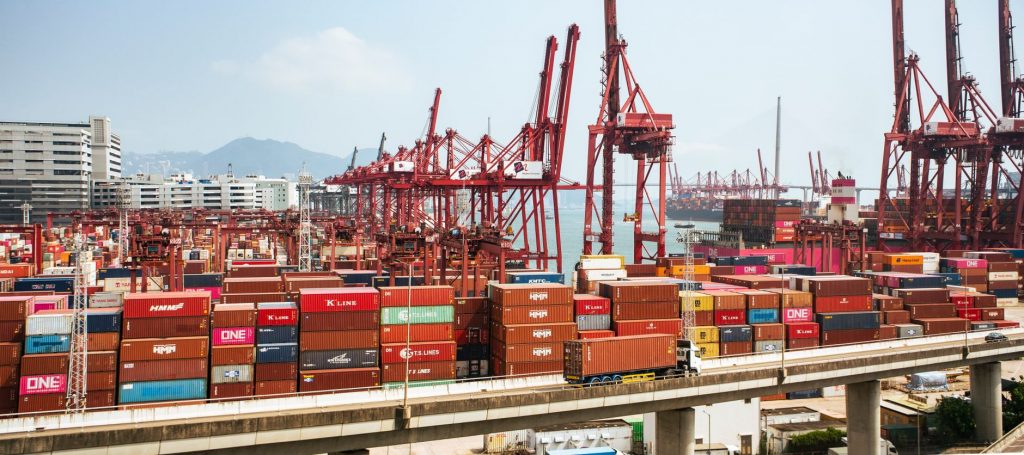
That matters in Asia because the region is dense, fast-moving, and operationally unforgiving. UNCTAD’s Review of Maritime Transport 2024 notes that Asia handles 63% of global container trade, while the World Bank’s Logistics Performance Index 2023 says reliable cross-border logistics still depends heavily on customs performance, infrastructure, and digitalization. In other words: partner quality and workflow speed still decide who wins the shipment.
TL;DR for freight forwarders in Asia:
- Choose membership only if it improves partner verification, quote response time, and trade-lane coverage you actually sell.
- For Asia, a digital workflow matters because multi-country quoting breaks down quickly when every lane depends on email chains and unvetted agents.
- If your team is comparing options, prioritize verified members, searchable partner discovery, visible enquiry flow, and a clear activation path after joining.
Why Asia makes freight network membership a BOFU decision, not a branding decision
Asia is not one market. Your team may quote Southeast Asia on Monday, China on Tuesday, India on Wednesday, and transshipment-heavy lanes on Thursday. A network membership becomes worth paying for when it removes three expensive bottlenecks:
- Partner uncertainty: You need to know whether the overseas agent is responsive, real, and commercially serious before you risk your client relationship.
- Quote-cycle drag: Manual outreach across time zones slows first response and lowers conversion.
- Lane fragmentation: Different countries, service strengths, customs expectations, and handling standards make Asia coverage uneven.
The macro backdrop supports that urgency. The WTO’s October 7, 2025 trade outlook said world merchandise trade volume growth was expected to slow from 2.8% in 2024 to 2.4% in 2025 and 0.5% in 2026. When trade growth gets harder to win, forwarders need sharper partner selection and faster response systems, not broader guesswork.
What a good Asia-focused network membership should change within 90 days
If membership is doing its job, your team should feel the difference operationally, not just socially. Within the first 90 days, you should see:
- Faster shortlisting of overseas partners for new Asia lanes
- Less time wasted on dead-end introductions
- Higher confidence when sending quote requests or destination enquiries
- Better internal visibility on who was contacted, who replied, and who is worth reusing
- A clearer path from discovery to first shipment to repeat cooperation
If you want a broader comparison framework first, review this freight network comparison checklist. If your question is more activation-focused, this related post on turning network membership into more enquiries in 90 days is a useful next read.
Comparison table: what Asia freight teams are really buying
| Model | What it gives you | Where it breaks in Asia | Best fit |
|---|---|---|---|
| Manual agent sourcing | Maximum flexibility and zero membership fee | Slow vetting, uneven reply rates, weak accountability, duplicated effort across branches | Occasional lanes only |
| Directory-heavy network | Large member list and broad country coverage | Coverage can look stronger than actual responsiveness; quality depends on how active members really are | Teams that already know how to self-manage partner qualification |
| Verified digital freight network | Structured partner discovery, verification, enquiries, and ongoing workflow visibility | Only works if your team adopts it consistently after joining | Forwarders that want faster quoting and repeatable trade-lane expansion |
Buyer guide: 5 questions to ask before you pay for membership
1. Can my team search by real trade-lane need, not just country name?
Asia shipments are rarely solved by country-level coverage alone. You need the ability to identify relevant partners based on lane, handling strength, responsiveness, and service fit.
2. How are members verified before I trust them with my customer?
Verification should not be vague. Ask how the network assesses applicants, how active members are surfaced, and what signals help you avoid unresponsive or risky connections.
3. Will this reduce quote-cycle time?
The World Bank notes that logistics reliability depends on the quality of services, infrastructure, border controls, and digitalization. For a freight network, that means the membership should reduce handoff delays and make enquiry routing cleaner, especially when your team is coordinating multiple Asia-origin or Asia-destination requests.
4. Can my sales and operations teams both use it?
A network is harder to monetize when only leadership touches it. The right setup gives commercial teams a faster way to source partners while helping operations teams keep partner conversations organized.
5. What happens after approval?
If onboarding is weak, membership value gets delayed. Before joining, check whether there is a clear first-30-day activation path. For context, One Globe Alliance already explains what happens after membership approval, which is the right kind of operational framing to look for.
Case-style example: how an Asia quote cycle usually improves
Scenario: A mid-sized independent forwarder in Mumbai starts seeing more requests into Vietnam, Thailand, and South China. The commercial team can sell the lane, but each quote requires fresh overseas outreach, manual follow-up, and internal guesswork about who is reliable.
Without a structured network workflow: The team loses a day or two just validating contacts, gets mixed response quality, and often submits client quotes later than competitors.
With a verified digital network membership: The team shortlists relevant partners faster, sends targeted enquiries, tracks who responds, and builds a reusable partner bench by corridor. That does not guarantee every quote will win, but it materially improves speed, confidence, and reuse.
This is where the distinction between a passive directory and an active network becomes commercial. In a slower trade environment, the forwarder that replies with confidence usually earns more second conversations.
Checklist: signs the membership is worth it for your Asia business
- You are actively expanding into new Asia trade lanes without opening your own offices
- Your team loses time validating overseas partners before quoting
- You need better visibility into quote requests, enquiries, and follow-up
- You want verified partners rather than broad but uncertain coverage
- You expect membership to support revenue generation, not just networking
If most of those are true, the decision is no longer whether to join a network. It is which network model best fits your workflow.
Why One Globe Alliance is a strong fit for this use case
For independent freight forwarders, One Globe Alliance makes the membership conversation easier because the value proposition is operationally clear: verified freight partners, partner discovery, quote requests, enquiries, and a digital workflow designed to help members find and work with each other more efficiently.
If your team wants to explore that path, start with the One Globe Alliance home page, review the membership page, browse the freight forwarding blog, and use the FAQ page to answer internal stakeholder questions before you commit.
CTA: If your Asia team is ready to shorten partner discovery time, improve quote responsiveness, and work with verified overseas counterparts more consistently, One Globe Alliance membership is worth a serious evaluation now, not later.
FAQs
What is the biggest reason Asia freight forwarders join a digital network?
The biggest reason is usually speed with confidence. Teams want faster access to verified overseas partners without relying on unstructured outreach every time a new lane appears.
How is a digital freight network different from a traditional member directory?
A traditional directory helps you find names. A digital freight network should help you find relevant partners, send enquiries, manage follow-up, and build repeatable workflows around those interactions.
Can network membership really help win more quotes?
Yes, if the network improves first-response speed, partner quality, and internal adoption. Membership alone does not create revenue, but a better partner workflow can improve your ability to quote accurately and quickly.
What should freight forwarders compare before choosing a network in Asia?
Compare verification standards, trade-lane relevance, member responsiveness, onboarding quality, and whether the platform helps your team manage quote requests and partner conversations in one place.
Is One Globe Alliance suitable for independent forwarders with limited overseas coverage?
That is one of the clearest use cases. If you want to expand coverage without building overseas offices first, a verified membership model can help you scale partner access more efficiently.